

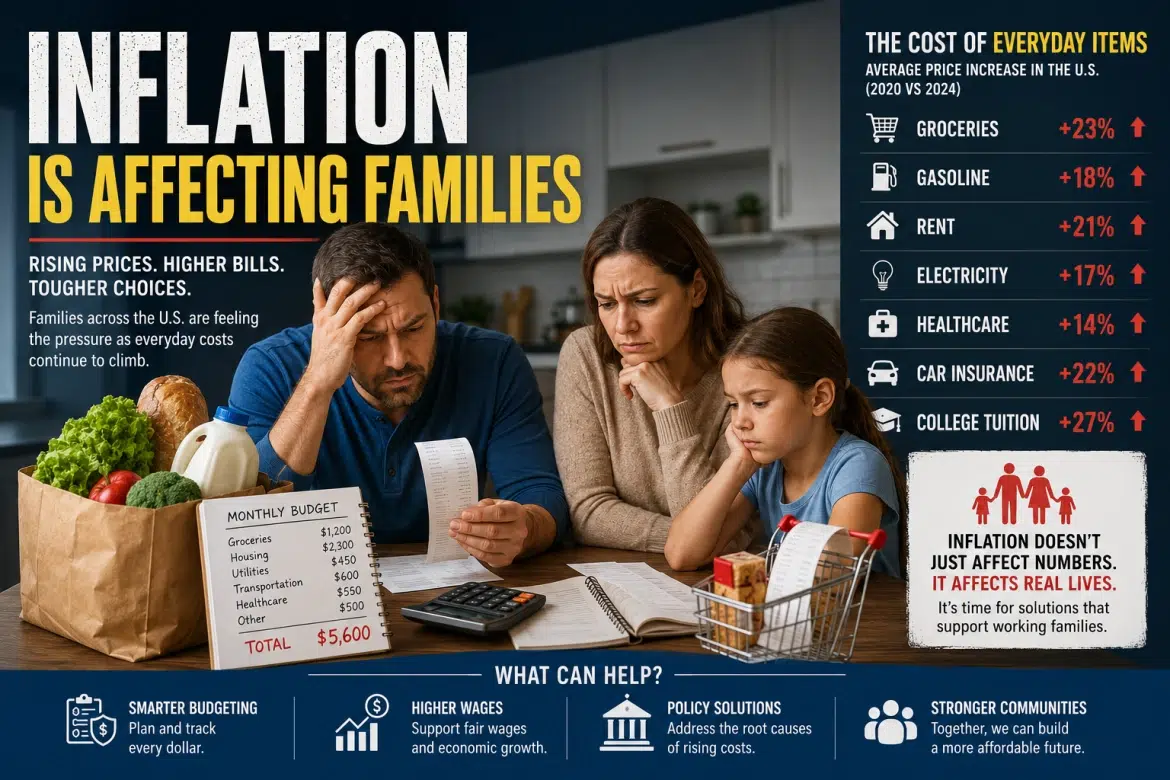
Are you struggling to run your household with the income you have? Do you feel that the financial difficulties are increasing day by day? Well, that is a sign of inflation; that is, a rise in prices that reduces the purchasing power. During this time, you notice a significant difference in your shopping experience; things are costing more than they used to be.
How families are affected during inflation
Inflation means an increase in the prices of goods and services. When production costs or demand for certain products increase, the prices of goods and services may rise. Shortage of certain goods and services can also result in a price increase. In such cases, the consumers are willing to pay more, and this pushes the price up.
We have noticed a sharp rise in inflation recently due to a sequence of events, like the COVID-19 pandemic, Brexit, the Russian-Ukrainian war, and the US-Iran war. These events caused disruptions in the supply change. Recently, there was a crisis for petrol in many countries due to the US-Iran war, for example. Inflation causes financial strain on households. Here are some ways inflation is affecting families.
Less purchasing power
Inflation leads to an overall increase in the price of goods over time, which results in a reduction of purchasing power. You will find that your income is no longer covering your expenses as it used to before. The value of money drops; a basket of groceries that cost $50 before now costs $70 or more. The lower and middle-income households are most hit by inflation because they don’t have much savings to deal with this financial crisis. These people are struggling with buying the necessities; they can’t reduce consumption. So, they have to find ways of earning more money.
Difficulty in managing debts
High inflation results in increased interest rate as Central bank increases it to reduce inflation. If you have taken a loan on variable interest rate, then a rise in interest rate will mean that you will have to pay more in installments every month. If you don’t have savings, then you won’t be able to pay the monthly installment, and so your debt amount will increase. However, if you were on a fixed-rate loan, then your overall debt amount will decrease, which will be at your advantage.
Difficulty in maintaining a good lifestyle
The middle-income households will find it difficult to maintain a good lifestyle. Sending kids to private school, attending social gatherings, continuing to travel by car, and other activities. As necessities will take up a major portion of their income during inflation, it will be tough for them to spend on other things needed to maintain a good lifestyle.
Less return from the savings account
Maintaining a savings account is important to pass through the ‘rainy days’. This account can be really handy in times of financial trouble. However, during inflation, the interest rate of the savings account becomes low, and you will get less return. If your inflation rate becomes more than the savings interest rate, then you will actually lose money. A savings account is therefore not a viable option for long-term investments.
Child care costs increase
Inflation increases the cost of child care. So, parents face hardship continuing with this service. Some people choose to leave their jobs or switch to part-time or online job arrangements to reduce the financial burden of child care services. Sharing nannies or taking child to in-home day cares become common practices as well.
Homeowners affected
Real estate can hedge against inflation as homeowners can increase rents to cope up with the difficult financial situation. Also, if they have a fixed-rate mortgage, then eventually they will have to pay less for their property. Therefore, investing in properties can be beneficial.
Save more for retirement
Inflation has a negative effect on retirement income. Social Security gives protection against inflation, but not most pensions. You will have to save up more money for your retirement to match your present lifestyle. Based on the rate of inflation, adjust the retirement savings amount. You have worked hard all your life, so don’t compromise on your lifestyle after you retire.
Adverse Effects on Bonds and Stocks
Many people invest in bonds and stocks that are thought to be less risky ventures. However, these investments are not safe from inflation. The high interest rates will reduce the present value of bonds and stocks. So, people will get lower returns from their investment.
Strategies to protect households during the inflation period
There are several strategies to cope with inflation. The most important one is to monitor your spending and adjust budgets accordingly. If you are running a business, then you can buy inventory earlier and lock in prices, so that later, when the price of goods increases, your profit is not adversely affected. When shopping, consider buying things whose prices are not affected by inflation.
You must make decisions about your assets. Hold real estate investments, I-Bonds, and Treasury Inflation-Protected Securities (TIPS) as they hedge against inflation. The values of bonds and stocks may decrease as inflation increases. So, rethink those investments.
Instead of saving money in a traditional savings account, switch to a high-yield savings account to save more money over time. High-income households can start buying locally produced products rather than imported ones. They must refrain from spending on luxury items like entertainment and travel.
If you have debts, then you should think of restructuring them to reduce financial strain. Consolidate the high-interest debts into low-interest ones. You can refinance your present loans, too, to get better loan terms and lower interest rates.
Conclusion
Every day seems expensive when there is inflation. You must try to maintain your financial stability by sticking to a budget, limiting your expenses, managing debts, and looking for ways of earning extra money. Monitor your expenses and adjust your budget from time to time to cope with inflation. Remember, you are not alone in this difficult journey; so, don’t get over-stressed.